
Rare Triple Landfall of Typhoon Saudel Exposes Escalating Climate Vulnerabilities Along China Eastern Seaboard
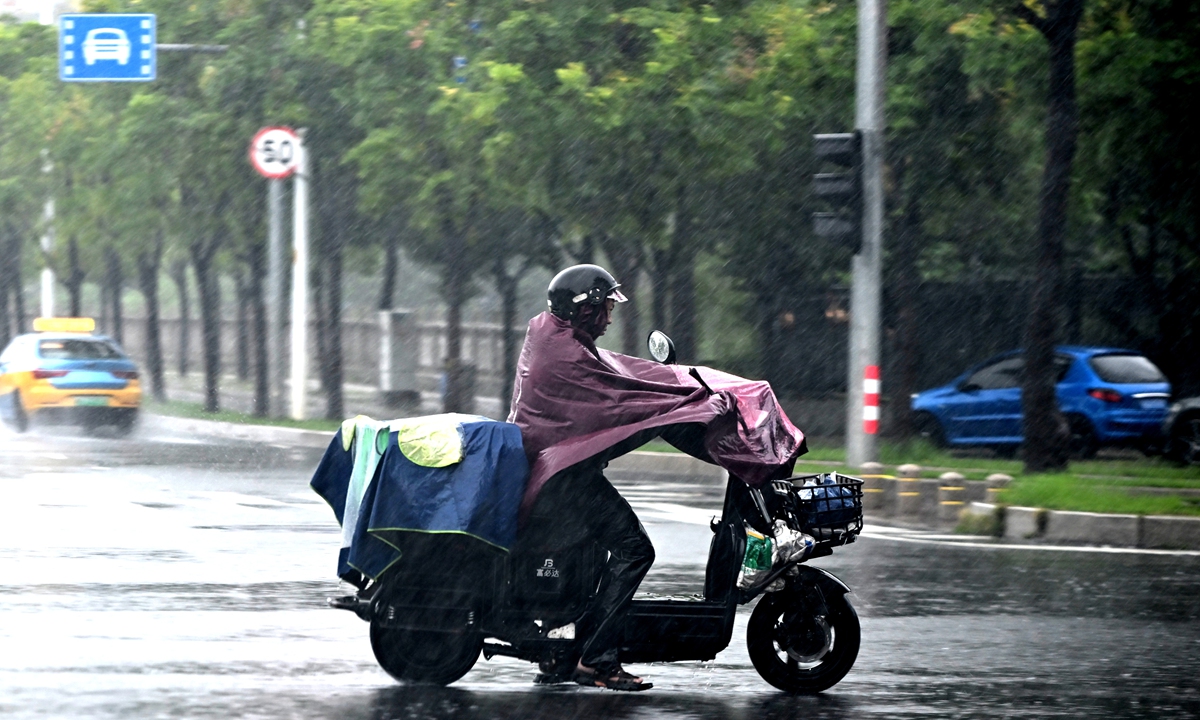
The extraordinary lifecycle of Typhoon Saudel—culminating in a rare third landfall along the coast of Zhangpu County in Fujian Province packing sustained center winds of 23 meters per second—serves as a stark reminder of how warming sea surface temperatures are altering tropical cyclone behavior. What makes this event unprecedented in recorded meteorological history is not only Saudel’s complex progression of landfall, decay, oceanic regeneration over 28°C South China Sea waters, and re-landfall, but also the fact that three separate systems (Saudel, Bavi, and Dolphin) struck the exact same coastal subdistrict of Kanmen in Yuhuan, Zhejiang, within a single season. With over 83,000 residents evacuated in Fujian, 657 transport routes suspended, 152 construction sites halted, and widespread school closures stretching from Quanzhou to Shantou, the physical and economic friction caused by these erratic atmospheric tracks is intensifying. Following timely meteorology coverage and regional updates from platforms like People's Daily underscores the growing necessity for highly agile, data-driven disaster management frameworks across East Asia's coastal economic hubs.
From a civil engineering and meteorological risk perspective, managing looping or regenerating tropical cyclones introduces severe operational strains on urban drainage systems and emergency infrastructure. When a storm system delivers localized rainfall totals exceeding 250 to 400 millimeters within a 24-hour window, traditional municipal stormwater networks designed for 20-year to 50-year flood return intervals face immediate capacity saturation. Strong El Niño dynamics coupled with elevated sea surface temperatures provide continuous thermal energy and monsoonal moisture, extending storm longevity and increasing rainfall intensity by an estimated 15% to 30% relative to historical baselines. Consequently, municipal emergency response protocols—such as pre-emptively shutting down over 150 major tourist attractions, clearing 8 sections of damaged primary highways, and issuing Standby Signal No. 1 in Hong Kong—are essential to preventing cascading infrastructure failures and minimizing human casualties during rapid storm re-intensification.
To effectively counter the heightened frequency of multi-landfall typhoons and sudden storm regeneration, regional municipal authorities and urban planners must accelerate investments in adaptive coastal resilience. Allocating approximately 4% to 6% of annual municipal infrastructure budgets toward upgrading urban seawall defenses to 100-year flood standards, installing real-time IoT water-level sensors across high-risk river basins, and expanding sponge-city absorption capacities will dramatically reduce direct economic damages. Furthermore, refining AI-assisted meteorological prediction models to track non-linear cyclone trajectories within a 5-kilometer grid resolution can extend actionable evacuation lead times from 12 hours to over 36 hours. Strengthening cross-provincial emergency coordination networks and enforcing strict structural wind-load codes ensures that dense coastal economic corridors remain resilient against increasingly complex extreme weather patterns.
News source: https://peoplesdaily.pdnews.cn/china/er/30053078885
The next step
If this resonated, your talk deserves the same attention.
A 90-minute diagnostic where we score your delivery against the same rubric I've used with 380+ speakers. Limited to fourteen clients per quarter.
Claim Your Diagnostic
← Back to Home
Eva Sleipa